By Christopher Clepp, ChFC® · Building Towards Wealth
How Can I Pay the Least Amount of Taxes When I Sell My Business?
Many meaningful tax savings opportunities in a business sale are usually made in the two to five years before the transaction, not at the closing table. Entity structure, QSBS qualification, deal structure, and charitable and installment strategies all need runway, and the owners who give them that runway may have access to a broader range of planning opportunities.
Key Takeaways
- Most meaningful tax savings are set up two to five years before the sale. By the time a letter of intent lands, many of the best windows may have closed.
- The same dollar of purchase price can be taxed at very different rates depending on which bucket it lands in. Model what you keep, not just what you sell for.
- QSBS can exclude up to 100% of gain for qualifying C-Corp owners — but the clock starts when the stock is issued, not when the sale begins.
- The biggest tax negotiation in most deals is asset sale vs. stock sale. Both sides have tools to bridge the gap.
- Donor-advised funds, installment sales, CRTs, and opportunity zones are real tools — and the places people most often get sold things that don’t fit.
Every business sale has two numbers. There’s the one you mention to your brother-in-law over Thanksgiving dinner, and there’s the one that lands in your account after federal tax, state tax, and the deal costs have taken their share. Owners spend years thinking about the first number. The second one is the one that pays for the rest of your life.
Here’s the part that catches people off guard. Many of the factors that determine that second number are addressed long before a buyer shows up. By the time a letter of intent is sitting on your desk, the planning windows that matter most may have closed. The closing table is generally for execution. Much of the strategy needed to happen earlier.
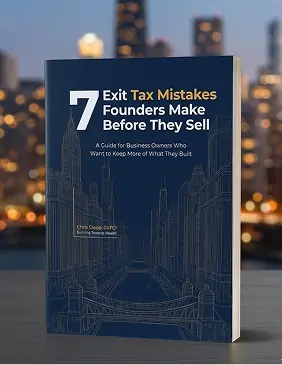
None of this is secret. Nobody hid these rules. They’re written into the tax code, and the owners who read them early may get to use them. This post walks through the five levers that matter most, and it’s the companion to our guide, 7 Exit Tax Mistakes Founders Make Before They Sell, which goes deeper on each one.
Runway beats cleverness
Anyone who cooks knows the meal gets decided during prep. By the time the pan is hot, you’re executing whatever you set up twenty minutes earlier. Selling a business works the same way, except the prep takes years instead of minutes.
One of the most costly exit tax mistakes is starting too late. Several tax-planning strategies have holding periods written into the law. Others need clean books, a restructured entity, or a few years of documented history before they’ll hold up. None of those can generally be manufactured in the ninety days between an LOI and a close.
If a sale is anywhere on your horizon, even a fuzzy someday, the time to start may be now. I made the full case for that in Should I Be Doing Tax Planning Years Before I Sell My Business?, and the operational fixes that raise the price buyers pay are covered in What Should I Consider Fixing Before I Sell My Business?
Count what you keep, not what you sell for
For many business owners, the number that matters most is their after-tax proceeds. Two deals with the same headline price can leave you with very different amounts in the bank, depending on how the deal is structured, what kind of entity is selling, and where you live when it closes.
A quick look at the 2026 federal rates shows why:
- Long-term capital gains: top rate 20% (taxable income above $613,700 MFJ / $545,500 single), plus 3.8% NIIT for a combined 23.8%.
- Ordinary income (depreciation recapture, inventory, consulting payments): up to 37%, the top bracket starting at $768,700 for joint filers.
- Real estate depreciation recapture: 25% maximum rate.
- State tax: stacks on top. Illinois, for example, takes a flat 4.95% on the gain.
The same dollar of purchase price can be taxed at very different rates depending on which bucket it lands in. That’s why modeling after-tax proceeds years before a transaction matters. For the bigger picture of what a sale involves, Everything You Need to Know About Selling Your Business is a good companion read.
Your entity is a five-year decision
The entity choices you make today can influence which exit strategies are available to you later.
Qualified Small Business Stock (Section 1202). For qualifying C-Corp owners, the One Big Beautiful Bill Act expanded the rules significantly. For stock issued after July 4, 2025: 50% exclusion after three years, 75% after four, 100% after five — up to the greater of $15 million or 10x basis, with a gross-asset ceiling of $75 million. Stock issued before that date stays under the old rules: five-year hold, $10 million cap. The catch: many professional service businesses are excluded. If you learn about QSBS the year you sell, the clock may have already run out.
S corporations and the conversion trap. Most S-Corp sales end up structured as asset sales, which brings the bucket problem into play. If your S-Corp used to be a C-Corp, gains on assets held at conversion can still face corporate-level tax during a five-year recognition period.
Holding companies and F reorganizations. Separating real estate or other assets from the operating company can give more flexibility on what you sell and when. An F reorganization is a tax-free restructuring often used to clean up an entity before a sale or to give a buyer the structure they want without blowing up your tax treatment. Both take setup time and good counsel. The entity question has its own post in this series: What Type of Business Entity Saves Me the Most on Taxes?
Asset or stock: the most expensive argument in the deal
Inside most sales, the biggest tax negotiation is whether the buyer purchases the company’s assets or the company itself.
Buyers generally want an asset deal. They get to step up the basis of what they bought, depreciate it again, and leave most of your old liabilities behind.
Sellers generally want a stock deal, because the gain on selling your ownership interest is usually long-term capital gain — one bucket at one favorable rate.
Where that lands depends on leverage, the size of the deal, and your entity. There are ways to bridge the gap: a higher price to offset the seller’s extra tax, a smarter allocation of price across asset classes, or elections and restructurings that give the buyer asset treatment while you keep closer to stock treatment. This one deserves its own post, and it’s coming next in this series.
The patient seller’s toolkit
Once the structure is set, a handful of strategies can reduce or spread out the tax hit. Every one of them has strings attached.
Donor-advised funds. The year you sell may be one of the highest-income years you’ll ever have, which may make it the year a charitable deduction is worth the most. Starting in 2026, itemized charitable deductions only count above 0.5% of your AGI, and for people in the 37% bracket the deduction’s value is capped at 35 cents on the dollar. If you want to give business interests or stock rather than cash, that gift has to happen well before the deal is locked in, or the IRS can treat the gain as yours anyway. More on how these work in Donor Advised Funds: A Flexible Solution for Charitable Giving.
Charitable remainder trusts (CRTs). A CRT can take in an asset before the sale, sell it without immediate tax at the trust level, and pay you an income stream for years, with the remainder going to charity. The tradeoff is real: the gift to charity is irrevocable, and your heirs get less of that money.
Installment sales. Taking part of the price over several years spreads the gain across tax years and can keep more of it out of the top brackets. The risk: you’ve become the buyer’s lender. If the business struggles under new ownership, your payments are exposed. One more wrinkle: depreciation recapture is generally taxed in the year of sale, even if you haven’t received the cash yet.
Qualified Opportunity Zones. Reinvesting gains into a qualified opportunity fund can defer and reduce tax, but timing matters right now. Gains invested under the original rules become taxable on December 31, 2026, so the deferral for a 2026 sale is short. A new version starts January 1, 2027: rolling five-year deferral with a 10% basis increase (30% for rural funds) after five years, under IRS Notice 2026-40. This is a real tool for the right situation and the wrong tool for plenty of the situations it gets pitched into. You’re trading a tax benefit for a long, illiquid, concentrated investment.
None of these should be used without careful analysis with your CPA, attorney, and advisor at the same table. The toolkit is valuable. It’s also where people get sold things.
Simple does not mean easy
Paying the least tax when you sell often comes down to a short list: start early, measure what you keep, set up the entity for the exit you want, negotiate the structure with your eyes open, and use the toolkit only where it fits your life. Simple does not mean easy, and the work takes years. The owners who do it typically don’t rely on luck at the closing table. They have usually planned ahead of time.
Free Guide
7 Exit Tax Mistakes Founders Make Before They Sell
If a sale is anywhere on your horizon, this guide walks through the seven mistakes I see most often in the two-to-five-year window before a transaction — including the after-tax modeling, QSBS timing, and entity review questions above.
Let’s talk
If you’d like to walk through which of these levers fits your business — and how much runway you have to use them — that’s the planning work I do with owners through the Abundant Wealth Process.
Disclosure: This article is provided for general educational and informational purposes only and is not personalized tax, legal, accounting, or investment advice. Tax figures cited are 2026 federal figures from IRS Rev. Proc. 2025-32, Public Law 119-21 (the One Big Beautiful Bill Act), and IRS Notice 2026-40, and are subject to change; state tax treatment varies. Qualified small business stock, charitable trusts, installment sales, and opportunity zone investments involve eligibility requirements, risks, and limitations, and opportunity zone funds are illiquid, long-term investments that may lose value. Christopher Clepp, ChFC®, is a financial advisor and not a CPA or attorney; consult qualified tax, legal, and accounting professionals before implementing any strategy.